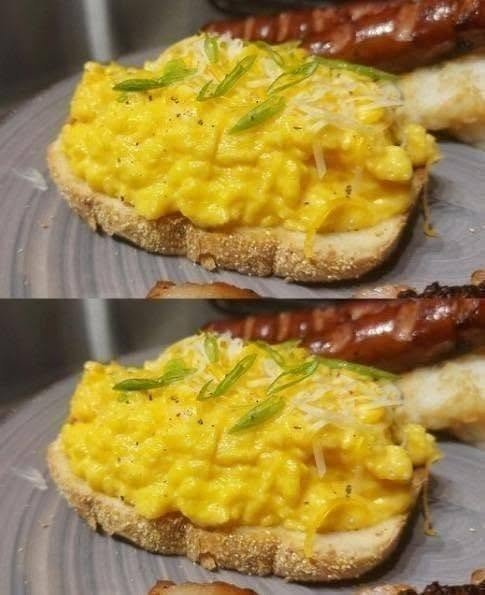
Perfect scrambled eggs are a matter of personal taste—some like them soft and custardy, others light and fluffy. This guide covers the classic techniques so you can master your ideal version every time.
The Two Main Styles
Understanding the goal helps you pick your method.
-
Soft & Custardy (French-style): Small, delicate curds, a creamy, almost sauce-like texture, and a rich yellow color. The emphasis is on slow, gentle cooking.
-
Light & Fluffy (American-style/Diner-style): Larger, firmer curds that hold their shape, with a tender, airy texture. The emphasis is on incorporating air and quick cooking.
The Golden Rules (Apply to Both Styles)
Before diving into the specific methods, these principles are essential:
-
Low and Slow is Safer: Eggs are delicate. High heat turns them dry and rubbery in seconds. Never walk away from the pan.
-
Season at the End: Adding salt too early can break down the eggs, making them watery. A pinch of flaky sea salt right before they finish cooking, or at the very end, is best.
-
Carryover Cooking is Key: Eggs continue to cook from residual heat after they leave the pan. Always pull them off the heat when they still look slightly wetter than your final goal.
Method 1: Soft & Custardy French-Style Scrambled Eggs
This is the method for intensely creamy, spoonable eggs.
-
Whisk Vigorously: In a bowl, whisk 2-3 eggs with a fork or whisk until completely uniform in color. You’re not trying to incorporate a lot of air, just fully combine the whites and yolks.
-
Low Heat and Butter: Place a small nonstick saucepan or skillet over low heat. Add a generous pat of butter (about 1/2 tbsp per egg) and let it melt slowly. It should foam, not sizzle violently.
-
Stir Constantly: Pour in the eggs. Using a silicone spatula, stir continuously in a figure-eight motion, scraping the bottom and sides of the pan.
-
Watch for Tiny Curds: After a few minutes, tiny curds will begin to form. Keep stirring nonstop. If the eggs start cooking too fast or sticking, lift the pan off the heat for a few seconds while continuing to stir.
-
Finish Creamy: When the eggs are a mass of soft, small curds resembling oatmeal but still very glossy and wet, remove from heat immediately. Stir in a final cold pat of butter or a spoonful of crème fraîche to stop the cooking and add richness. Season and serve on warm toast.
Method 2: Light & Fluffy Diner-Style Scrambled Eggs
This is the quickest method for substantial, tender curds.
-
Whisk for Air: Whisk 2-3 eggs vigorously with a fork and a small splash of milk or water (about 1 tsp per egg) until fully combined and slightly frothy. The liquid turns to steam, helping create fluffiness.
-
Medium-Low Heat: Place a nonstick skillet over medium-low heat. Add butter or oil. You want the butter to melt and sizzle gently—not violently.
-
Gentle Push & Fold: Pour in the eggs. Let them set undisturbed for 20-30 seconds until you see a rim of cooked egg around the edge.
-
Form Large Curds: Using your spatula, gently push the set egg from the edges toward the center. Tilt the pan so the runny egg flows to the bare spots. Repeat this pushing and folding action across the pan. Do not constantly stir—this creates large, soft folds.
-
Pull Before Dry: When the eggs are mostly set but still slightly runny on top, with no visible liquid pooling, turn off the heat. Give one final gentle fold in the residual heat of the pan for 5-10 seconds. They should look glossy and moist, not dry. Season immediately and serve.
Common Mistakes to Avoid
-
High Heat: The #1 enemy. Eggs will be tough, dry, and ready in 30 seconds flat.
-
A Crowded Pan: Use a pan that’s too small, and the eggs will steam rather than form distinct curds. An 8-inch pan is perfect for 2-3 eggs.
-
Skipping the Nonstick Pan: For creamy eggs, it’s nearly mandatory. You don’t want curds sticking to a stainless steel pan.
-
Waiting for “Done”: If they look fully cooked in the pan, they will be overdone and dry on the plate.
For a finishing touch, try showering them with fresh chives, a crack of black pepper, and a tiny pinch of flaky salt just before serving.